Islamabad Peace Summit: Can J.D. Vance Save a Fraying Deal?
Sign up for our free newsletter
Subscribe to the America Report Updates to have our top stories delivered directly to your inbox.
The world is currently witnessing one of the most chaotic diplomatic high-wire acts in modern history with the upcoming Islamabad Peace Summit. While the 14-day Iran Ceasefire 2026 remains technically in effect as of Thursday evening, the agreement is under immense strain. The primary point of contention is a massive “misunderstanding” regarding the scope of the truce—specifically whether it extends to Israel’s ongoing operations in Southern Lebanon.
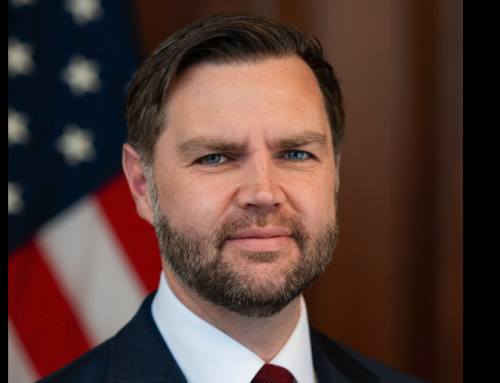
Vice President J.D. Vance is scheduled to land in Pakistan this Friday to lead the Islamabad Peace Summit on Saturday, April 11. This meeting will represent the highest-level direct engagement between U.S. and Iranian officials since the 1979 Revolution, but the agenda is expanding by the hour as new demands surface.
The Lebanon “Misunderstanding”
The breakthrough announced on Tuesday night has been marred by continued violence. While U.S.-Iranian hostilities have paused, Israel has intensified its campaign against Hezbollah in Southern Lebanon and Beirut.
-
Vance’s Stance: The Vice President told reporters in Budapest that the U.S. never promised to include Lebanon in the ceasefire. “I think the Iranians thought the ceasefire included Lebanon, and it just didn’t,” Vance stated, dismissing the inclusion as a “legitimate misunderstanding.”
-
Tehran’s Outrage: Iran’s Foreign Minister, Abbas Araghchi, countered that a “ceasefire everywhere” was the basis of their agreement. Tehran is now threatening to resume military action if the “war on Lebanon” does not cease immediately.
-
UN Warning: The United Nations has warned that the entire deal is at “grave risk” if the strikes in Lebanon continue to undermine the spirit of the 14-day window.
The Chokehold: Status of the Strait of Hormuz
A central pillar of the Islamabad Peace Summit will be the physical reopening of the Strait of Hormuz. Despite the White House expecting an “immediate” flow of oil, the reality on the ground—and water—is far more restrictive.
-
Limited Transit: Iran has announced it will permit no more than 15 vessels a day to pass, maintaining a heavy “security protocol” that the U.S. views as continued blockade.
-
Mining Reports: Semi-official Iranian news agencies have hinted that the Strait may remain mined, serving as a “poison pill” should the Islamabad talks fail.
-
Market Volatility: Uncertainty over the “open” status of the Strait has kept Brent crude prices near $100 per barrel, preventing the predicted relief at American gas pumps.
Saturday’s Agenda: 10 vs. 15 Points
When J.D. Vance meets with Iranian Speaker Mohammad Bagher Ghalibaf at the Islamabad Peace Summit, two vastly different maps for peace will be on the table.
High Stakes and “Shadow Intel”
The chaos is mirrored in the financial world, where “War Whales” on prediction markets like Polymarket are already betting on whether the Islamabad Peace Summit will result in a permanent deal or a return to the “Power Plant Day” threats.
The world hopes for a Saturday breakthrough, but as the Vice President prepares to sit across from a regime the U.S. was threatening to “wipe out” just 48 hours ago, the atmosphere remains thick with distrust. If Vance cannot bridge the gap between “dual-use” infrastructure and “total regime change,” the 14-day clock may simply be a countdown to a much larger explosion.