Ukraine Peace Talks: Zelenskyy Offers a Freeze to End War
Sign up for our free newsletter
Subscribe to the America Report Updates to have our top stories delivered directly to your inbox.
Ukraine Peace Talks Show Signs of New Momentum. Could there finally be a breakthrough in the seemingly endless struggle to end Russia’s war against Ukraine? Ukrainian President Volodymyr Zelenskyy (48) has signaled a willingness to freeze the current battlefield front lines, potentially opening a path toward a ceasefire after years of devastating warfare. His remarks came amid renewed diplomatic activity involving Washington, Moscow and Kyiv — and following an increasingly bitter confrontation with U.S. President Donald Trump (80).
In an interview with Fox News on Wednesday, Zelenskyy said Ukraine could accept a halt to fighting along the existing front lines, even if Russia continued to occupy substantial portions of Ukrainian territory during negotiations. Asked whether he would accept an arrangement under which Ukraine retained control of roughly 75% of its territory, Zelenskyy responded: “Yes, right now, we have to freeze.”
The Ukrainian leader sounded unusually optimistic about the possibility of a negotiated settlement. “I think this is a real way to end this war,” he said, describing the proposed arrangement as a ceasefire or simply a way to stop the killing. But Zelenskyy emphasized that freezing the battlefield would represent only an initial step. Ukraine would still require credible security guarantees from the United States and European allies to prevent another Russian invasion.
Freezing Front Lines Without Surrendering Territory
Zelenskyy’s proposal could represent an important step toward negotiations, although it does not amount to formal recognition of Russia’s territorial claims. Freezing the front lines would suspend combat along the current battlefield positions without necessarily resolving the political and legal status of occupied territory.
For Kyiv, the distinction is crucial. Ukraine has repeatedly rejected demands to formally surrender territory to Russia, arguing that such concessions would reward military aggression and undermine its sovereignty.
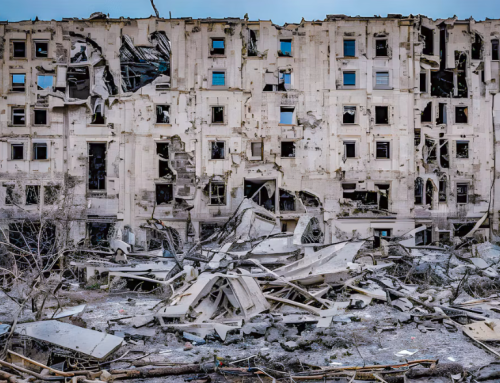
However, with millions displaced, Ukrainian cities suffering repeated missile and drone attacks, and the conflict continuing to drain the country’s resources, Zelenskyy appears increasingly focused on establishing conditions for a sustainable ceasefire.
The Ukrainian president also stressed the human cost of the war. “We are not losing this war. But we are losing people,” he said, describing the suffering of civilians and the millions of Ukrainians unable to return home.
Trump and Zelenskyy Clash Over Military Support
The diplomatic opening comes against the backdrop of a serious deterioration in relations between Washington and Kyiv.
In recent days, Zelenskyy has accused the United States of restricting critical military assistance, including satellite communications, intelligence sharing and the transfer of Patriot air-defense interceptors.
Particularly controversial are reported restrictions affecting Starlink and Starshield, satellite systems that play important roles in Ukrainian military operations. Ukrainian officials have suggested that limitations on the systems may have been imposed to pressure Kyiv over its continued attacks on Russian oil infrastructure.
Trump has denied ordering the restrictions, while U.S. officials have disputed accusations that Washington deliberately threatened to cut off essential military support. The competing accounts have further complicated relations between the two governments.
The president has also publicly criticized Zelenskyy, suggesting that the Ukrainian leader has become an obstacle to peace and raising questions about whether Ukraine needs different leadership or negotiators.
Despite those tensions, Zelenskyy has continued discussions with American representatives and described recent meetings in Oslo as productive.
Putin Meets Witkoff as Kushner Joins Remotely
Meanwhile, U.S. special envoy Steve Witkoff (69) traveled to St. Petersburg on Wednesday for another high-level meeting with Russian President Vladimir Putin (74).
The talks took place at the Constantine Palace and lasted approximately three hours. Trump’s son-in-law Jared Kushner (45), another member of the U.S. negotiating team, participated remotely.
Witkoff presented updated American proposals for ending the war, following consultations with Zelenskyy and European officials in Norway.
The meeting produced at least one tangible diplomatic development: Russia released American citizen Stephen Hubbard (74), a retired teacher who had been detained for more than four years on charges involving alleged mercenary activity in Ukraine.
Hubbard’s release was welcomed by Washington as a humanitarian gesture, although it did not indicate that Moscow had softened its fundamental territorial demands.
Putin also agreed in principle to resume trilateral negotiations involving Russia, Ukraine and the United States around November 10. According to Kremlin officials, the discussions could take place in Abu Dhabi and would address security arrangements and possible steps toward ending the war.
Russia Still Rejects an Immediate Ceasefire
Yet the central obstacle remains unresolved: Moscow has not agreed to stop fighting.
Russian Foreign Minister Sergei Lavrov (76) recently reiterated that Russia opposes a ceasefire that would allow Ukraine to regroup, rebuild its armed forces and acquire additional Western weapons.
The Kremlin continues to insist on major concessions concerning occupied Ukrainian territories and Ukraine’s future security relationship with NATO. Those demands remain fundamentally at odds with Kyiv’s position.
Russia’s agreement to return to negotiations therefore represents a diplomatic opening, not a peace settlement. No ceasefire has been announced, and Russian military operations continue.
For Zelenskyy, the immediate priority is to stop the bloodshed while securing guarantees that any agreement will not merely give Moscow an opportunity to prepare for another attack.
For Trump, the renewed contacts offer an opportunity to advance his stated ambition of ending the Ukraine war through direct diplomacy.
But with the two sides still divided over territory, security and the conditions for a ceasefire, the coming negotiations will face formidable obstacles.
For now, Ukraine peace talks have regained momentum. Whether that diplomatic movement can finally translate into silence on the battlefield remains the central question.